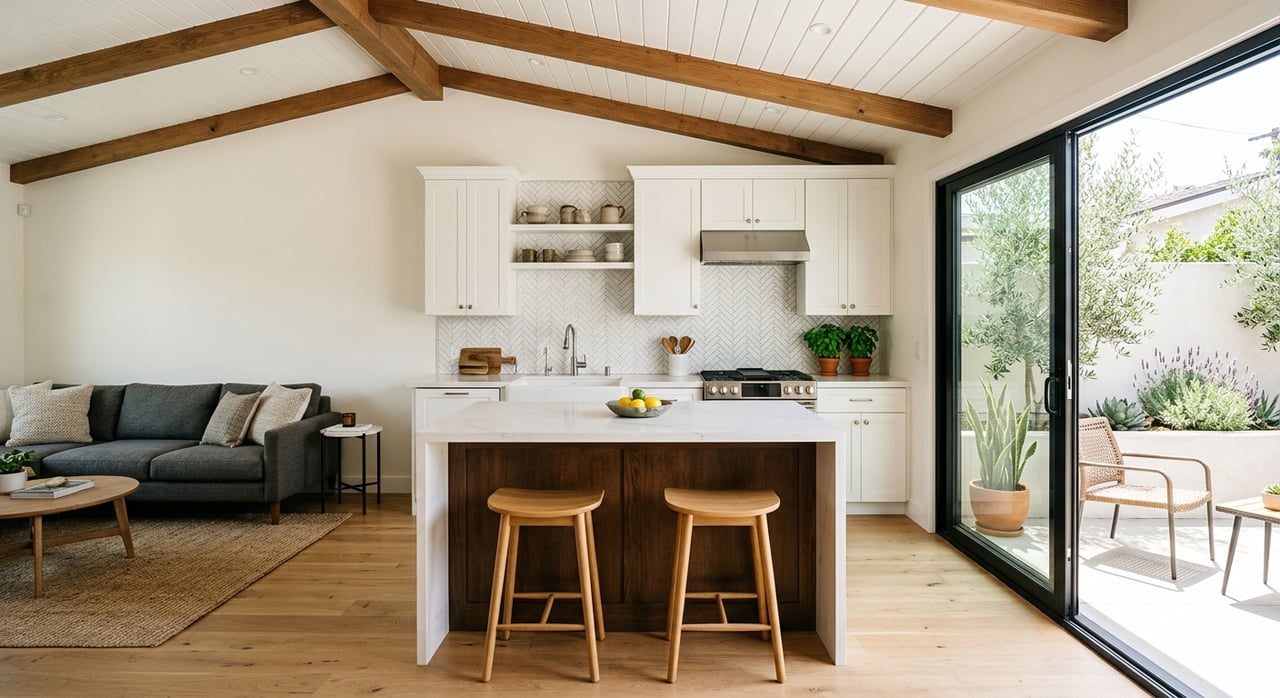
How To Price Your Oceanside Home In Today's Market
If you price your Oceanside home too high, you may lose the buyers who matter most in the first few weeks. If you price it too low, you risk leaving money on the table. The good news is that today’s Oceanside market gives you clear signals about what buyers are willing to pay, and if you understand those signals, you can price with more confidence. Let’s dive in.
Oceanside is still moving, but buyers are paying close attention to value. Recent local data shows a median sale price of $869,551 in April 2026, while Zillow’s home value index placed Oceanside at $877,452 and Realtor.com showed a median listing price of $859,900.
Those numbers are close, but they are not interchangeable. Sale price, list price, and home value estimates each measure something different, which is why pricing your home takes more than picking the biggest number you can find.
Speed matters too. Redfin reports homes selling in about 27 days on average over the last three months, while Realtor.com shows a median of 34 days on market and Zillow says homes go pending in about 16 days.
The takeaway is simple: well-priced homes in Oceanside can still move in roughly a month or less. That makes your opening price especially important.
One of the biggest pricing mistakes sellers make is relying on a citywide average. Oceanside has major differences by ZIP code, neighborhood, and property type, so the right price for your home depends on where it sits and how it compares to nearby listings and recent sales.
Realtor.com’s neighborhood snapshot shows just how wide the spread can be. Downtown Oceanside had a median listing price of $1.299 million, while Oceana was listed at $459,999. At the ZIP code level, median listing prices ranged from $649,999 in 92057 to $1,312,000 in 92054.
That kind of spread means you should not anchor to a broad Oceanside number alone. A home in 92054 is competing in a very different price environment than a home in 92057 or 92058.
Recent local MLS updates show large pricing differences across Oceanside submarkets.
Those are not small differences. They show why a pricing strategy should be built around your micro-market, not just the city name on your address.
If you own a condo, townhome, or other attached property, you should not compare it to detached houses nearby just because they share the same ZIP code. Buyers shop these categories differently, and the pricing data reflects that.
For example, in 92058, detached homes had a median sales price of $899,990, while attached homes were at $499,000. In 92057, detached homes were at $820,000 and attached homes were at $605,000.
That gap can change how buyers view value, monthly costs, and alternatives in the market. It also means your comp set needs to match your property type closely.
The current data suggests that buyers are still willing to pay close to asking price when a home is positioned well. Realtor.com reports that Oceanside homes sold for about 100% of asking price in its latest citywide analysis, and Redfin says homes receive an average of 3 offers.
That does not mean every listing gets top dollar automatically. It means the market is responding to homes that enter at a realistic, competitive price.
In several Oceanside ZIP codes, sale-to-list ratios are still strong, but the pace varies. In 92057, detached homes averaged 24 days on market and 100.7% of original list price, while attached homes averaged 43 days and 97.8%. In 92058, detached homes averaged 20 days and 99.6%, while attached homes averaged 61 days and 97.3%.
These numbers tell an important story. Pricing is not just about the final number. It is also about timing, demand, and how your home performs during its first few weeks on the market.
In a market where many homes move within 20 to 40 days, early buyer response can tell you a lot. If showings are strong, interest is steady, and you are seeing serious activity, your price may be in line with the market.
If activity is weak from the start, the market may be sending you a message. Buyers often compare your home against the best available options in real time, so if your price does not line up with current competition, they may simply move on.
This is one reason overpricing can cost more than many sellers expect. A high starting price can reduce early momentum, and once a home sits, buyers may begin to wonder why.
A strong pricing strategy starts with recent closed sales, but it should not end there. The California Association of REALTORS® notes that median price is simply the midpoint of sales and should not be treated as the exact price of any individual home.
That matters because your home is not a statistic. It has specific features that can affect value, such as condition, square footage, lot size, views, HOA costs, parking, permitted upgrades, and property type.
You also need to look at active listings and pending sales. Closed sales show where the market has been, but active and pending properties help show where buyers are shopping right now.
When you price a home in Oceanside, small differences can have a real impact. Two homes may be in the same ZIP code and still command different pricing based on features buyers care about.
Key adjustments often include:
This is why pricing should be tailored, not copied from a nearby listing. Even in the same area, not every home belongs in the same price bracket.
San Diego County data offers useful perspective. In April 2026, countywide detached homes had a median sales price of $1.1 million, 35 days on market, 98.9% of original list price received, and 2.3 months of supply. Attached homes had a median sales price of $680,000, 41 days on market, 97.9% of original list price received, and 3.6 months of supply.
That helps frame the broader market, but it should not replace an Oceanside-specific analysis. Oceanside often sits below the county detached median in many segments, and neighborhood-level differences inside the city are still significant.
In other words, county data can set the backdrop, but your final price should come from local comps and current buyer behavior in your part of Oceanside.
It is easy to focus on the highest possible list price, but that does not always lead to the best outcome. The right price is the one that attracts buyers, creates leverage, and helps protect your net proceeds.
That is especially important because headline sale ratios do not account for every concession or assistance factor in a transaction. A price that looks strong on paper is not always the same as the best real-world result.
A smart strategy balances visibility and return. You want a price that gets attention from serious buyers while still supporting your goals at closing.
If you are getting ready to sell, a good pricing plan usually follows a few simple rules.
This approach is not about underpricing your home. It is about positioning it where buyers are already ready to act.
When you price correctly from day one, you give your home the best chance to stand out, attract strong interest, and sell on a better timeline.
If you are thinking about selling in Oceanside, the right price starts with a local, property-specific strategy, not a guess. The Cronin Team - Ron and Michelle Cronin can help you evaluate your home against today’s Oceanside market, understand your competition, and build a pricing plan designed to support your goals.
We strive to transform your aspirations into reality. We don't just work in real estate; we create lasting partnerships built on trust and results. Your success is our mission!

RON CRONIN | CA DRE# 01234750
MICHELLE FERRY-CRONIN | CA DRE# 02010785
EXP REALTY OF SOUTHERN CALIFORNIA, INC. | CA DRE# 02187306
(760) 421-5298
[email protected]
10620 Treena St Ste 230
San Diego, CA 92131