Oceanside Rental Property Outlook For Coastal Investors
If you are looking at Oceanside as a coastal rental market, the big question is simple: where can you still find a workable path to cash flow, long-term demand, and fewer regulatory surprises? That matters even more in a beach-city market where pricing, zoning, and rental rules can change the math fast. The good news is that public data points to Oceanside as a more attainable coastal option with a solid renter base and several long-term investment angles worth watching. Let’s dive in.
Oceanside’s rental market continues to show steady demand, even as new supply comes online. According to HUD’s San Diego-Chula Vista-Carlsbad housing market report, Oceanside posted an apartment vacancy rate of 4.5% in Q2 2024, with average rent at $2,283 and about 650 units under construction.
That vacancy level suggests a market that is active but not overheated. In the broader region, HUD reported a 4.4% vacancy rate and $2,527 average monthly rent in Q2 2025, describing the market as slightly tight. HUD also notes that personnel stationed at Camp Pendleton mainly rent in Oceanside, which adds an important layer of long-term housing demand.
More recent apartment data from RentCafe’s Oceanside market page shows the city’s average apartment rent at $2,602 in February 2026. On that same page, studios averaged $1,959, one-bedrooms $2,340, two-bedrooms $2,707, and three-bedrooms $3,281.
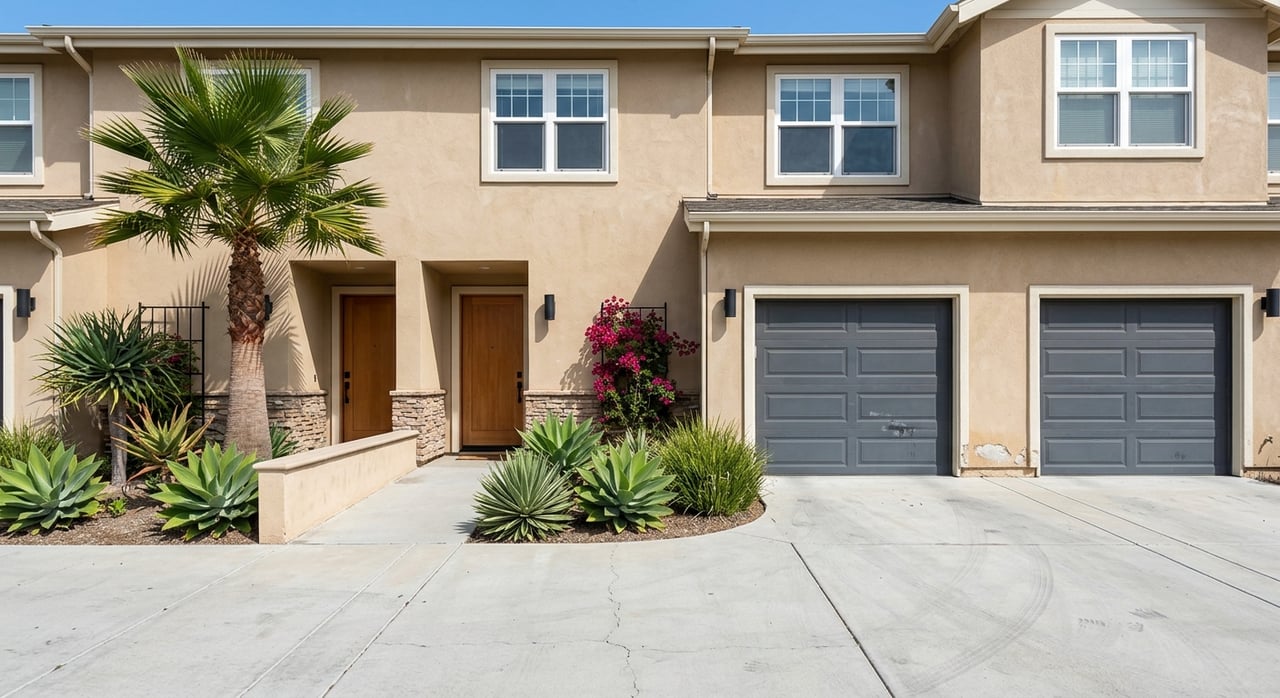
For investors, the first takeaway is that Oceanside appears to support a meaningful long-term renter base. RentCafe reports that 42% of households are renter-occupied, and 41% of rentals fall in the $2,501 to $3,000 range. That gives you a useful benchmark when you are underwriting a condo, townhome, or single-family rental.
The second takeaway is that apartment averages do not tell the whole story. Apartments.com’s local Oceanside guide indicates that listed houses, condos, and townhomes often ask materially more than apartment-market averages. In plain terms, if you are analyzing a detached home or upgraded condo, apartment reports may understate your likely rent range.
A practical way to read the data is this: apartment stats are best used as a baseline, not a ceiling. If you are comparing opportunities across property types, that distinction matters.
Not every part of Oceanside performs the same way, and that can shape your entry strategy. RentCafe’s submarket data shows Downtown Oceanside averaging $3,302 and Townsite averaging $3,007, both above the city average.
Other areas sit lower, including Mission Mesa at $2,229, Fire Mountain at $2,437, and East Side-Capistrano at $2,485. That spread matters because it highlights a familiar coastal pattern: the downtown and coastal core command a premium, while inland submarkets may offer a lower acquisition entry point.
For many buyers, this creates two different investor paths:
The data also suggests that two-bedroom and three-bedroom layouts may be more relevant than a studio-heavy strategy if your goal is stable long-term income. That is especially useful when you are evaluating family-sized condos, townhomes, or detached homes.
If you want coastal exposure in North County, Oceanside compares well on affordability. Based on RentCafe’s regional comparisons, Oceanside’s $2,602 average apartment rent sits below Carlsbad at $3,242, Encinitas at $3,054, Solana Beach at $2,776, and Del Mar at $3,785.
That lower cost profile can matter in two ways. First, it may create a more accessible entry point for investors who want to own near the coast without jumping to the pricing often seen in neighboring beach towns. Second, Oceanside’s 42% renter share suggests a somewhat deeper year-round renter base than some nearby coastal markets.
That does not automatically make Oceanside easy. It does mean the city stands out as a market where coastal location and year-round rental demand may be easier to balance.
If your strategy goes beyond a simple buy-and-hold rental, Oceanside’s zoning framework deserves close attention. The city’s zoning ordinance page explains that the current code includes separate residential and coastal-zone articles and directs property owners to verify whether a parcel is in the Coastal or Non-Coastal area using the city’s zoning map tools.
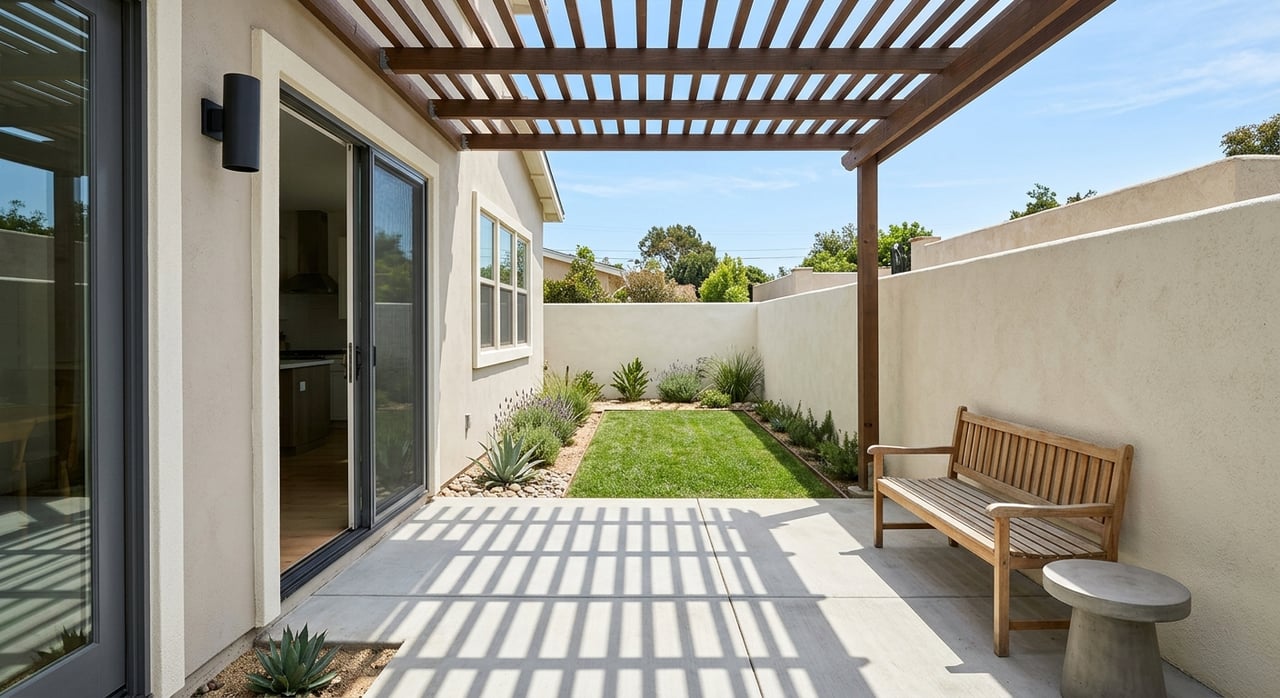
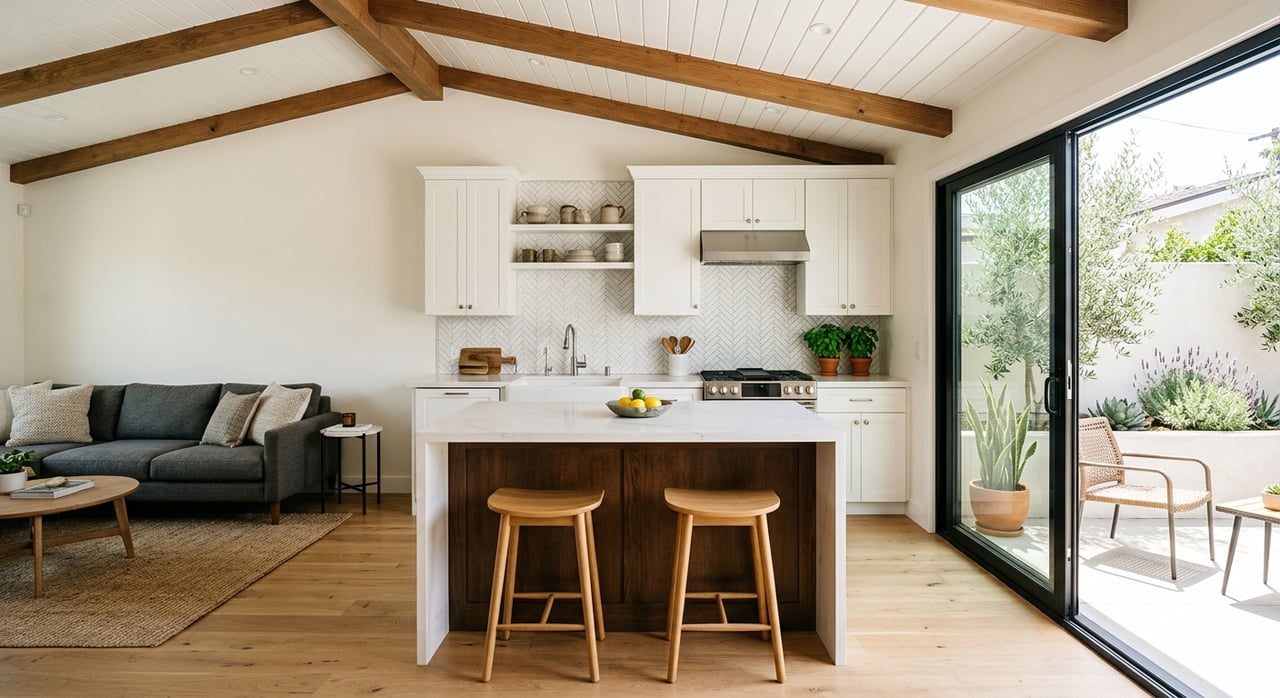
For long-term rental planning, Oceanside is relatively friendly to ADUs. On the city’s Accessory Dwelling Unit page, Oceanside states that detached ADUs up to 1,200 square feet may be allowed under local rules, and JADUs are also allowed subject to state-law owner-occupancy and parking provisions.
There is an important limitation, though. The city says ADU and JADU rentals must be longer than 30 days, which means they are geared toward long-term housing rather than short-term stays.
SB 9 is another tool worth knowing. According to the city’s SB 9 guidance, the law applies to certain single-family zoned parcels such as R-1, RS, and RE and can allow two-unit development or an urban lot split. The city also states that owner occupancy is required on one of the split lots for at least three years and that no unit on an SB 9 property may be rented for less than 30 days.
Put together, these rules point in one direction: Oceanside’s land-use tools appear better aligned with long-term densification, owner-occupied investing, and house hacking than with vacation-rental conversion.
Short-term rental rules are one of the biggest reasons investors should underwrite Oceanside carefully. On the city’s short-term rental program page, Oceanside defines a short-term rental as a legally permitted dwelling unit or portion of a dwelling rented for no more than 30 consecutive days.
The same city page states that new non-hosted STRs are prohibited outside the Coastal Zone as of February 10, 2024. It also says STR permits are required for STR properties as of June 7, 2024, with limited exceptions, and notes that STRs are prohibited in mobile home parks, on certain nonconforming lots, and on properties with an ADU or JADU permitted on or after September 9, 2017.
There are also operating details that matter for underwriting. The city says permits are non-transferable, tenants cannot offer a property as an STR, and the current fee is $250 plus a $215 inspection fee, with annual renewal required.
The city also notes a pending coastal-zone amendment that would cap non-hosted STR permits west of Coast Highway at 480 and prohibit new non-hosted STRs in the R-1 zone, though that proposal is still awaiting Local Coastal Plan approval. For investors, that means one thing: if your plan depends on short-term rental income, you need to confirm current eligibility and permit status before you buy.
Based on the available public data, some strategies look cleaner than others in Oceanside.
Long-term rentals appear to be the most straightforward path for many investors. Demand is supported by a sizable renter base, mid-4% vacancy, and the presence of Camp Pendleton-related renters in the local market.
This approach may be especially attractive if you want fewer moving parts than a short-term rental model. It can also fit condos, townhomes, and single-family homes across a wide range of price points.
If a parcel qualifies, an ADU can create additional long-term rental income or support a flexible owner-occupied setup. Since Oceanside allows ADUs under its local and state framework, this can be a useful way to increase utility on the same property.
Still, the details matter. You will want to verify zoning, lot constraints, coastal status, and the city’s current development standards before making assumptions.
House hacking may be one of the more practical coastal investor plays in Oceanside. A property with room for an ADU, JADU, or compliant multi-unit setup can help offset ownership costs while keeping your strategy aligned with the city’s long-term rental rules.
For buyers who want to live in one portion and rent another, Oceanside’s framework offers more support here than it does for pure vacation-rental investing.
If you are comparing investment opportunities in Oceanside, it helps to focus on a few basics first:
That kind of process can help you avoid buying for a strategy the property cannot legally support.
Oceanside remains one of the more interesting coastal markets in North County because it blends relative affordability with year-round rental demand. Public data shows a renter-heavy base, steady apartment fundamentals, and rent premiums in the downtown and coastal core, while local rules push many investors toward long-term rentals, ADUs, and owner-occupied strategies.
If you are looking for a beach-area investment without stepping all the way up to the pricing often seen in Carlsbad, Encinitas, Solana Beach, or Del Mar, Oceanside deserves a close look. And if you want local guidance on neighborhoods, property types, and the details that can affect rental strategy, the Cronin Team - Ron and Michelle Cronin can help you evaluate Oceanside opportunities with a practical, on-the-ground perspective.

We strive to transform your aspirations into reality. We don't just work in real estate; we create lasting partnerships built on trust and results. Your success is our mission!

RON CRONIN | CA DRE# 01234750
MICHELLE FERRY-CRONIN | CA DRE# 02010785
EXP REALTY OF SOUTHERN CALIFORNIA, INC. | CA DRE# 02187306
(760) 421-5298
[email protected]
10620 Treena St Ste 230
San Diego, CA 92131